The project began in 2009 with an encounter between Tal Adler and a 30-metre-long glass-faced cabinet in the department of anthropology at the Natural History Museum Vienna. Behind the glass, from floor to ceiling, more than 8,000 human skulls were arranged on shelves, numbered and inventoried and facing the glass – or the windows in front of the cabinet.
Facing the cabinet, shocked and amazed, Adler heard from Margit Berner – curator at the department of anthropology – about the ways in which the skulls ended up on these shelves. He learned that these were merely a part of a collection of human bones of over 40,000 individuals kept inside boxes, stored in different locations at the museum. He heard about a century-long frenzy for skulls fed through military, scientific, and colonial expeditions; missionary networks; private trade; looted graves; war hospitals and prisoner camps; Nazi extermination facilities; and various kinds of excavations and exhumations.
Stepping closer and gazing at one skull, and then at another, Adler saw the individuals they were. He started to think about the people they used to be, how each had a name, a life with passions, problems, family, projects. Stepping back to grasp the entire cabinet – the silent lives amassed in it, arranged densely and orderly – was overwhelming. A ten-year project unfolded around this initial shock.
In 2012, after gaining research funding, Adler returned to photograph the cabinet to create a highly detailed life-size panorama of it. He then returned to the museum with a question: what was behind the large wooden doors in the middle of the cabinet, interrupting the repeating pattern of skulls on shelves?
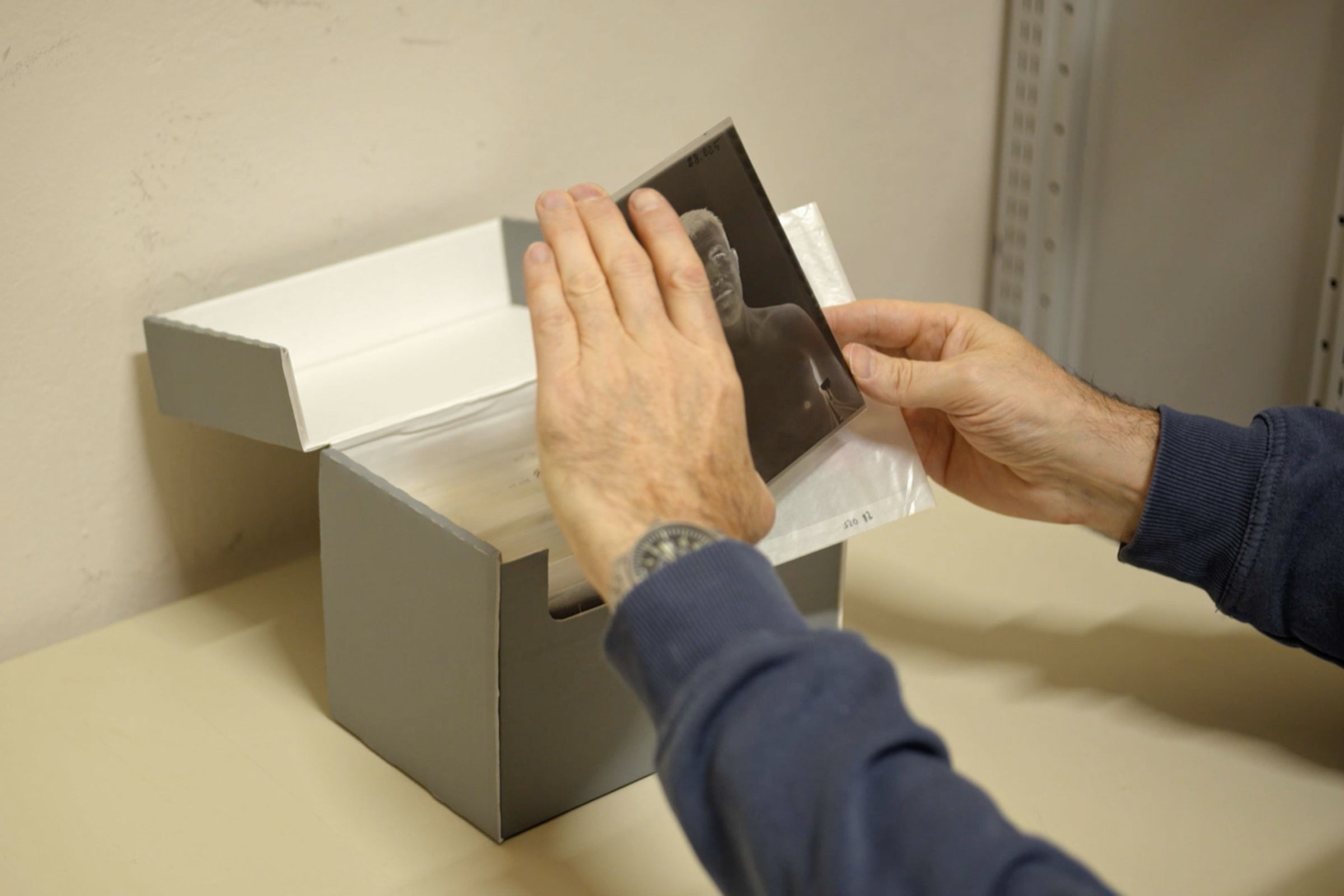
The answer provided Adler’s second realization, or shock, in front of the cabinet. Maria Teschler-Nicola – head of the anthropology department at the time – accompanied him to the cabinet and unlocked the wooden doors. Behind them, a big room was revealed: the department’s historical photographic laboratory (darkroom), established during National Socialism. With darkroom techniques becoming obsolete, the room was now being converted to store the department’s large photographic collection of over 50,000 items. These included images of thousands of living people – among them Indigenous people, performers in human shows, prisoners of war, and Holocaust victims – photographed and classified as biological specimens, or criminals, through racist research protocols.
This discovery sharpened Adler’s dilemma about the panorama he had just created: Using the panorama to create a public discussion around such collections and their troubled histories, could the critical image reproduce the objectification it sought to address? Would exhibiting the panorama repeat the violence of exposure, dispossession, and dehumanization? And as the project intended to involve descendants of people whose skulls were in the collection, would they be offended by, or object to, the display of an image of their ancestors’ remains?
These questions became the basis of Dead Images. In 2016, with research and innovation funding from the EU Horizon 2020 programme, an interdisciplinary group of artists, anthropologists, archaeologists, and historians formed around the project. Together with museum professionals, researchers, representatives of descendant communities and others concerned with such collections, they investigated different, sometimes conflicting positions on the collection, research, display, and return of human remains.
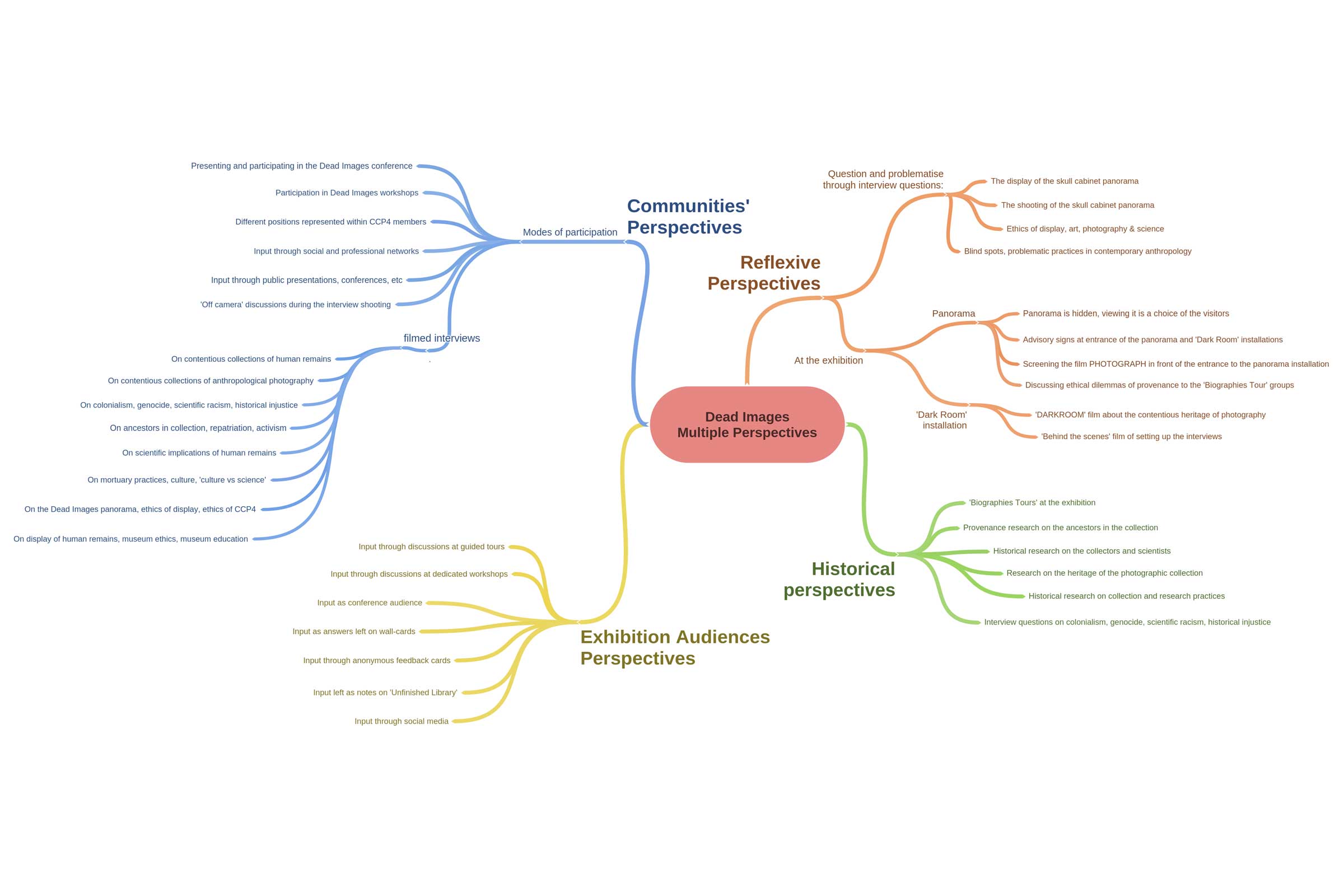
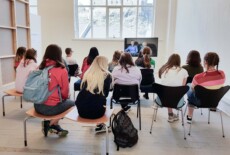
The process culminated in a large exhibition at Edinburgh College of Art in 2018. Rather than resolving the dilemmas that had shaped the project, the exhibition incorporated them as its core rationale, extending the questioning from the collections and their histories to the photograph, the curatorial process and the experiences of the visitors themselves.
Dead Images was supported by:
2011–2012: Austrian Science Fund (FWF/PEEK), for the project MemScreen
2013–2015: Austrian Science Fund (FWF/PEEK), for the project Conserved Memories
2016–2019: European Union Horizon 2020, for the project TRACES
Dead Images team / Creative Co-Production (CCP) in TRACES (2016-2019):
Tal Adler, Linda Fibiger, John Harries, Joan Smith, Anna Szöke, Maria Teschler-Nicola