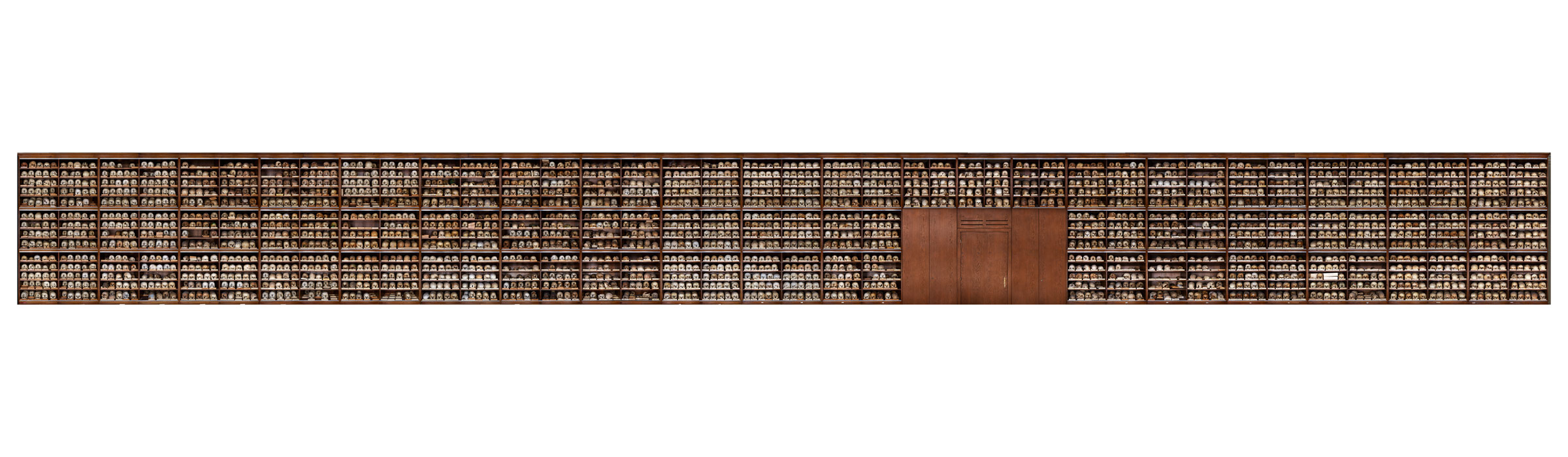
Skull Cabinet Panorama
After encountering the skull cabinet at the Natural History Museum Vienna, and learning about the often-violent histories of collecting, researching, and displaying these skulls, Tal Adler developed a concept for a travelling exhibition and events programme around collections of ancestral and human remains. Aiming to convey something of the experience and insights he himself had in front of the cabinet, Adler proposed creating a highly detailed, 1:1 photograph of the 30-metre-long cabinet and the 8,000 skulls in it. This large panorama could then be exhibited in countries from which skulls in the collection had been taken, inviting the public – representatives of descendant communities, museum professionals and collection custodians, researchers, activists, and others – to discuss the fate of such collections and the important question of returning ancestors to their communities.
In 2012, as part of the project MemScreen, Adler photographed the 30-metre-long cabinet. Over two days, using a high-resolution medium-format camera travelling on rails parallel to the cabinet, he captured 120 exposures of sections of the cabinet as glass doors were removed and reinstalled as the camera moved along the cabinet.
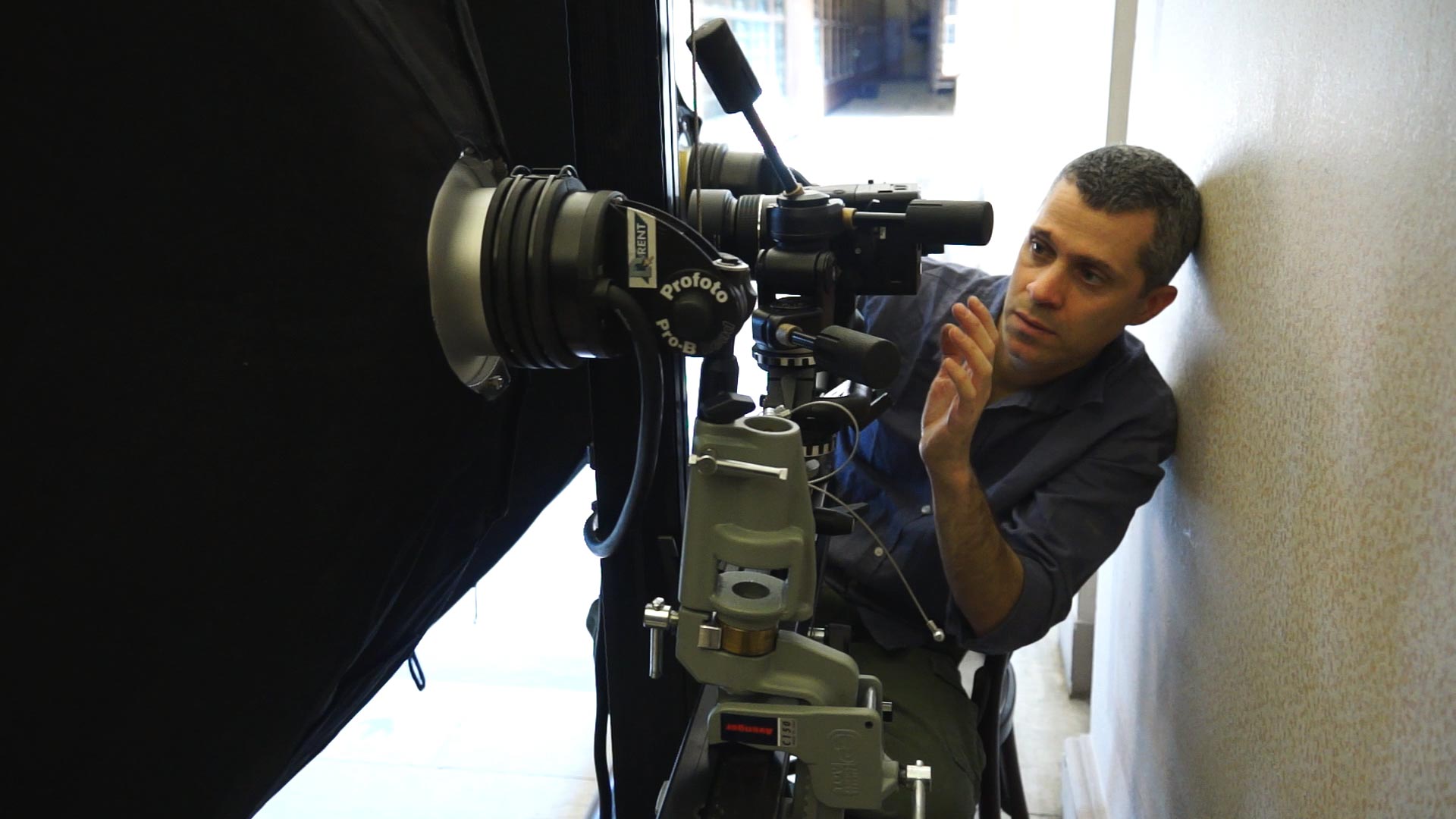
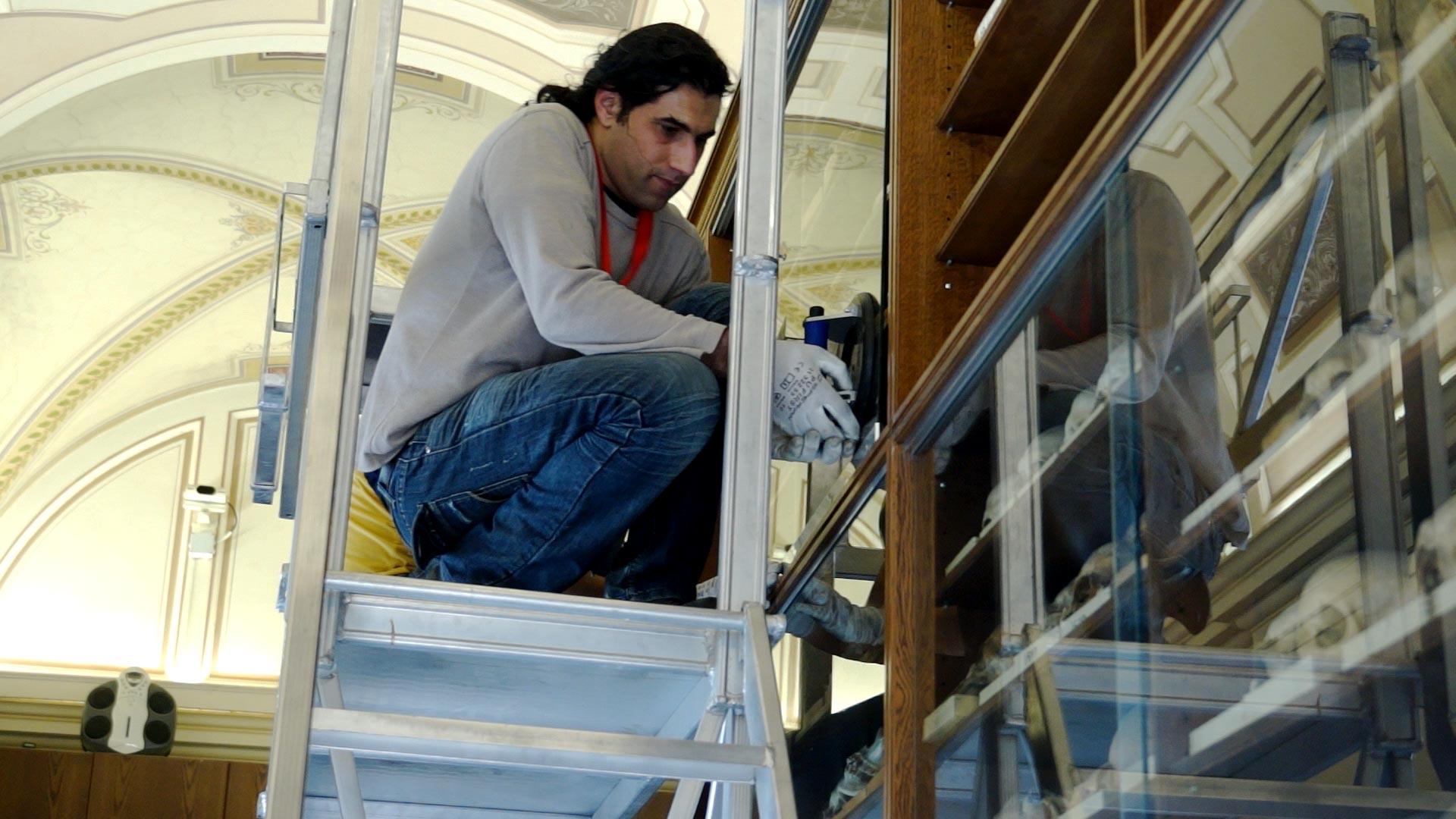
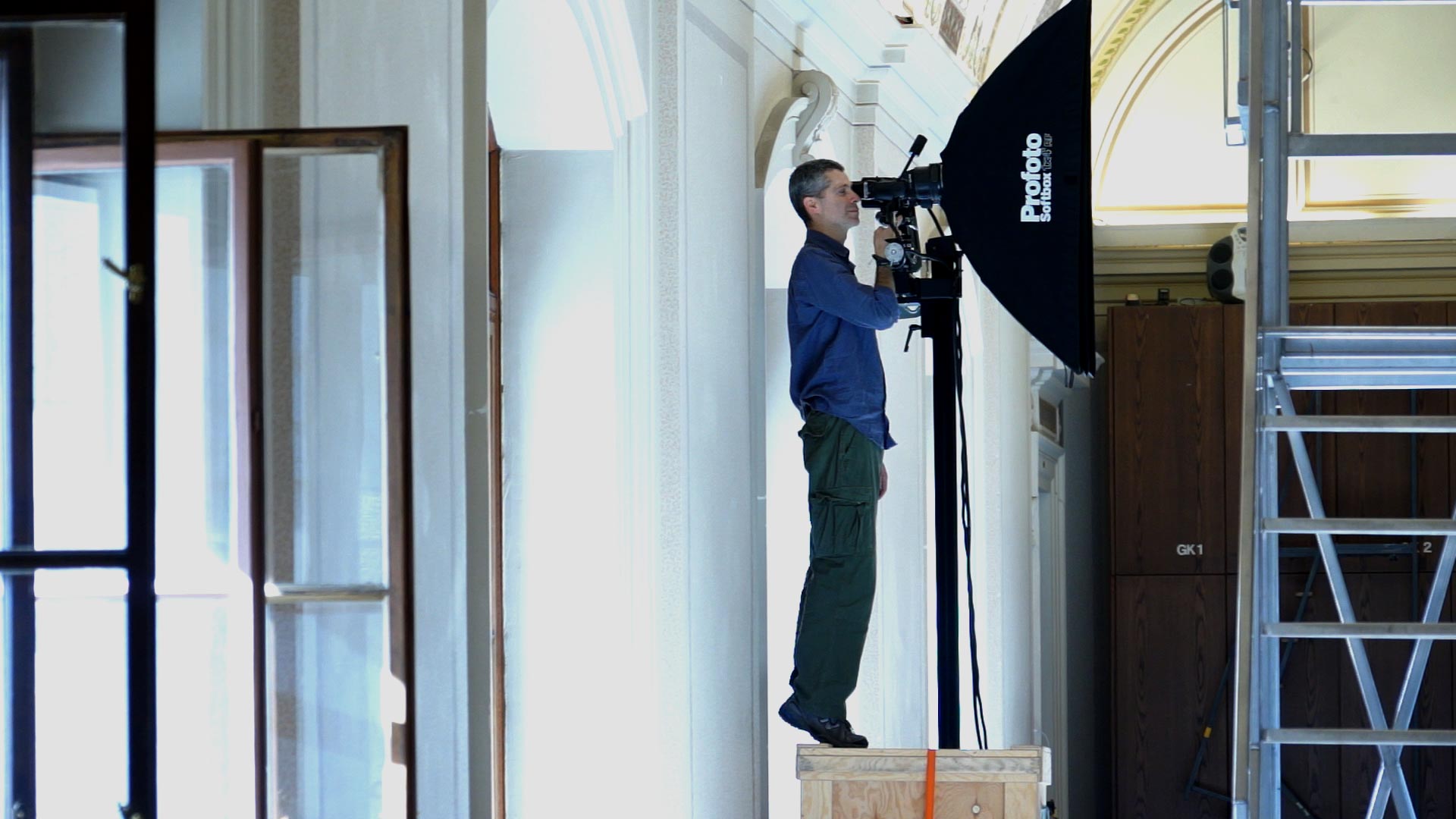
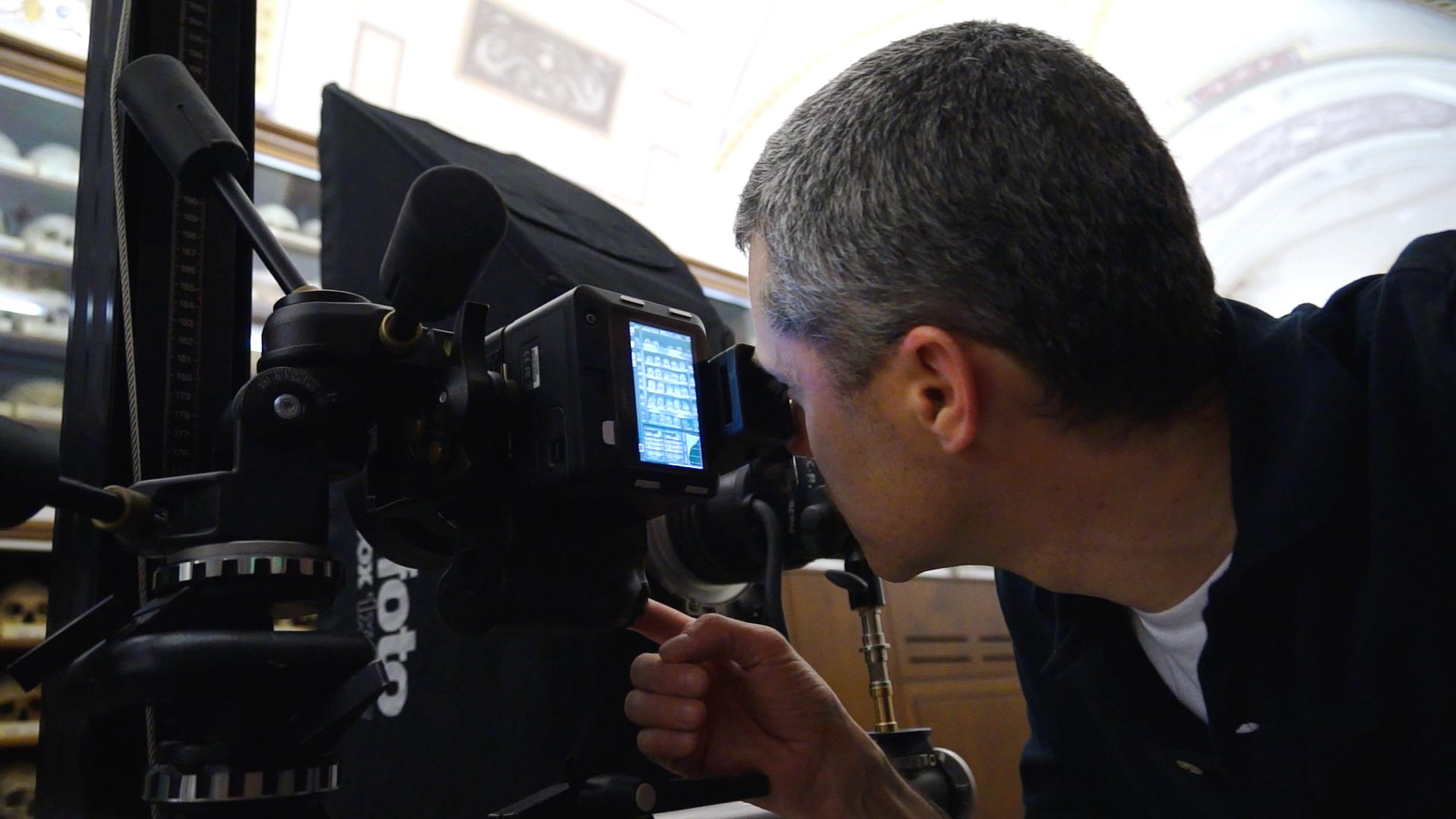
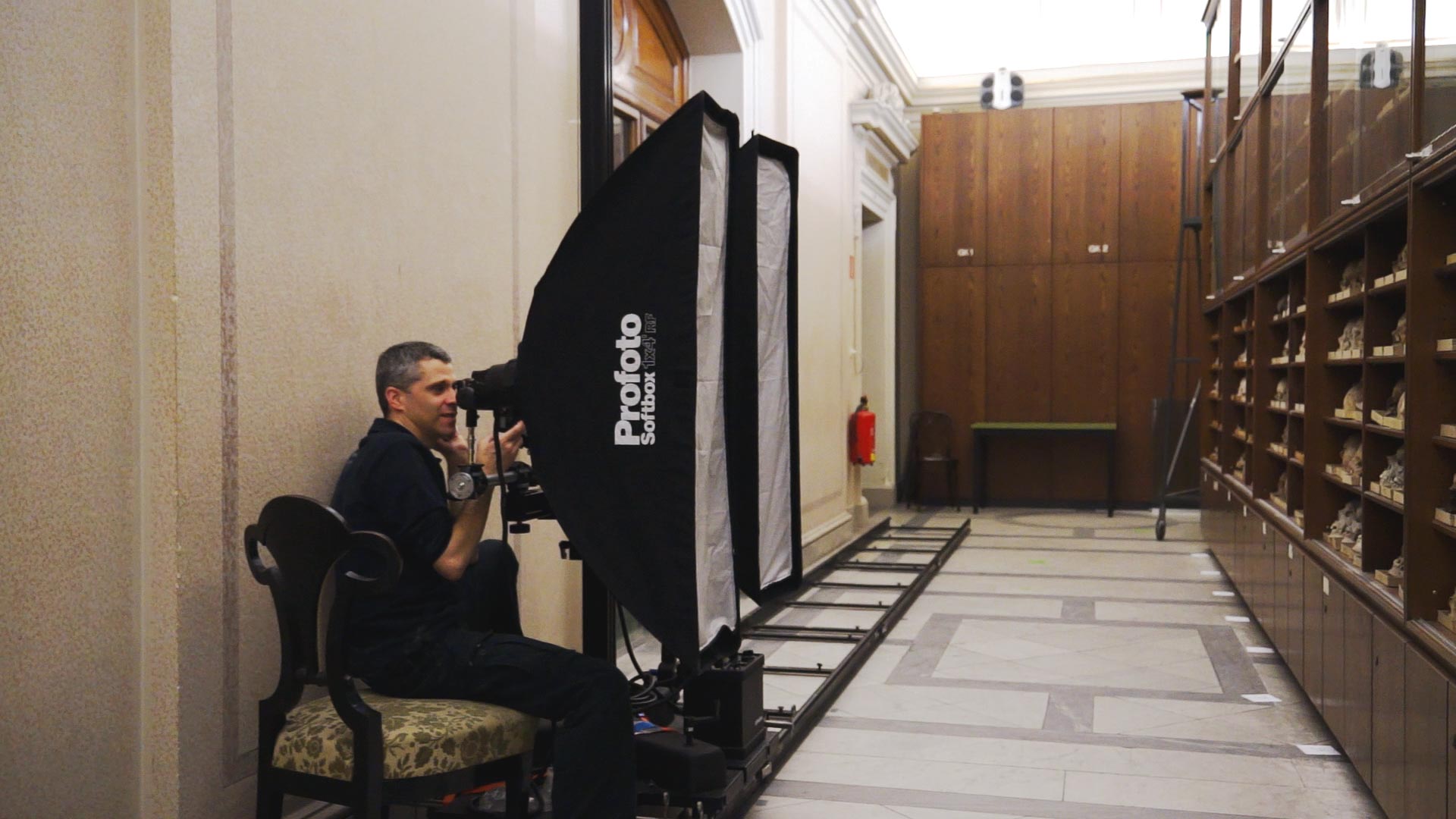
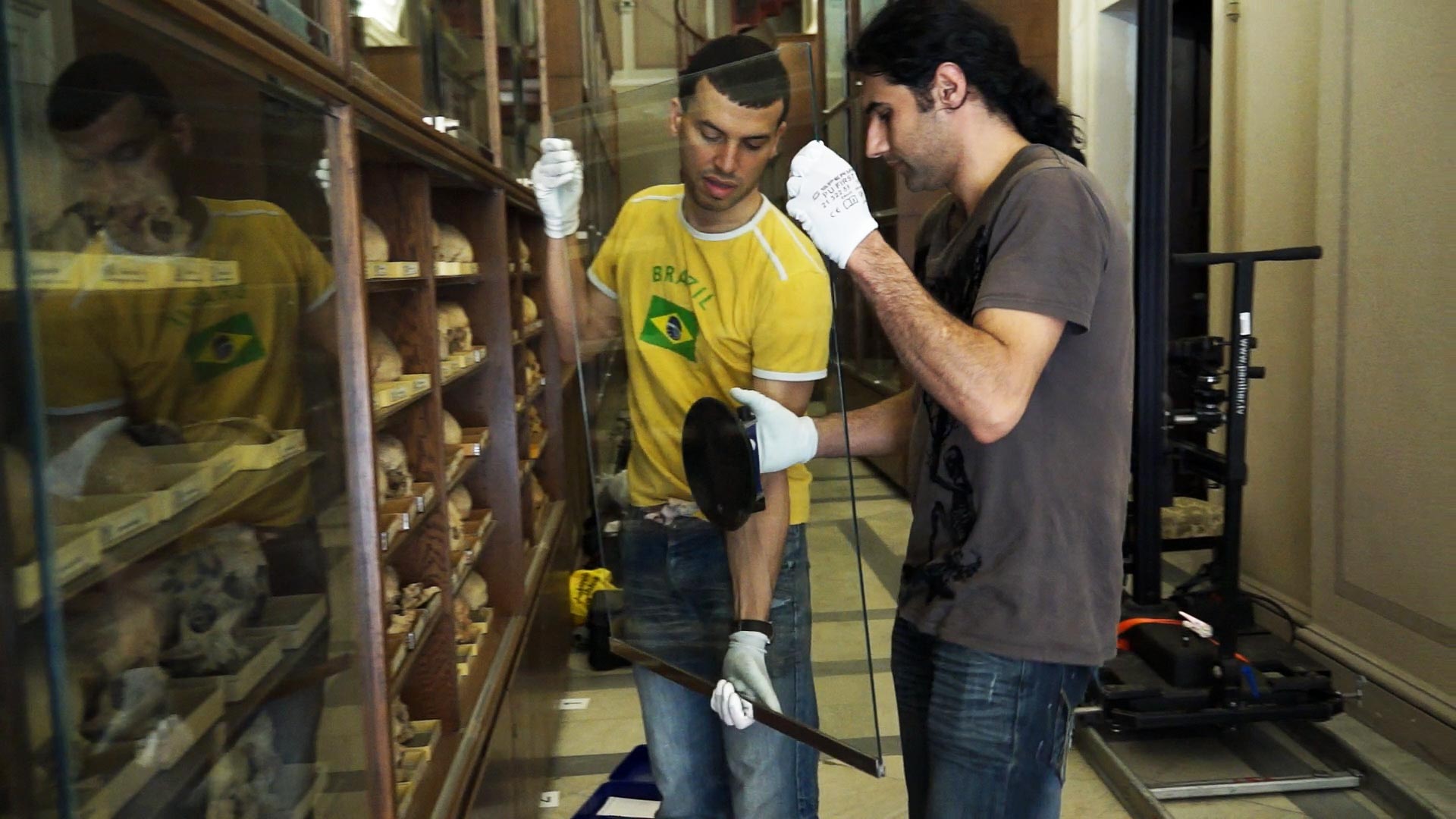
The files were then digitally corrected and mosaicked into a single, multi-viewpoint (also called multi-perspective, linear, or parallel) panorama. Designed to be printed at life size at approximately 30 x 4 metres, the ultra-high-resolution panorama would allow viewers to experience the overwhelming scale of the cabinet from a distance and distinguish extremely fine details at close range.
But bringing the collection into public view through photography also meant exposing human and ancestral remains whose presence in the museum was itself contested. Adler declined early proposals to exhibit the image without adequate contextualisation and instead continued researching the ethical and political implications of showing it. The dilemma posed by the panorama required more time, more perspectives and a form of collaboration in which the conditions of representation themselves could be questioned. This became one of the impulses for Adler to develop the Creative Co-Production model and, from 2016, the interdisciplinary team that developed Dead Images within TRACES.
Artistic concept and photography: Tal Adler
Digital processing: Bildbearbeitungsstudio Malkasten
Technical support and sponsorship: Academy of Fine Arts Vienna (Thomas Freiler, Friedemann Derschmidt, Osama Zatar, Osama Salamah), Digitalstore Vienna (Michael Exner, Christian Sharpf), Natural History Museum Vienna (Wolfgang Reichmann)
Video documentation: Mich’ael Zupraner