Dead Images Films
Over the course of the project, Tal Adler conducted filmed interviews with people whose relationships to human and ancestral remains reflected a wide spectrum of experiences, interests, and stances. Interviewees included representatives of descendant communities and advocates for repatriation, museum directors and collection custodians, physical anthropologists and other researchers, religious representatives, artists, writers, and activists. Rather than seeking to reconcile their positions, the films bring them alongside one another, allowing questioning, disagreement, and different understandings of, and relationships to, the dead to remain visible.
Three films – RETURN, CULTURE, and PHOTOGRAPH – were edited thematically from 21 of these interviews. Together, they move between questions of belonging, ownership, and return; scientific and spiritual practices; objectification and re-humanization; and the ethics of collecting, researching, photographing, and displaying human remains. In the exhibition, the films preceded the barred space in which the panorama was mounted, introducing visitors to these different perspectives and dilemmas before they could decide whether or not to view the panorama.
CULTURE
25 min
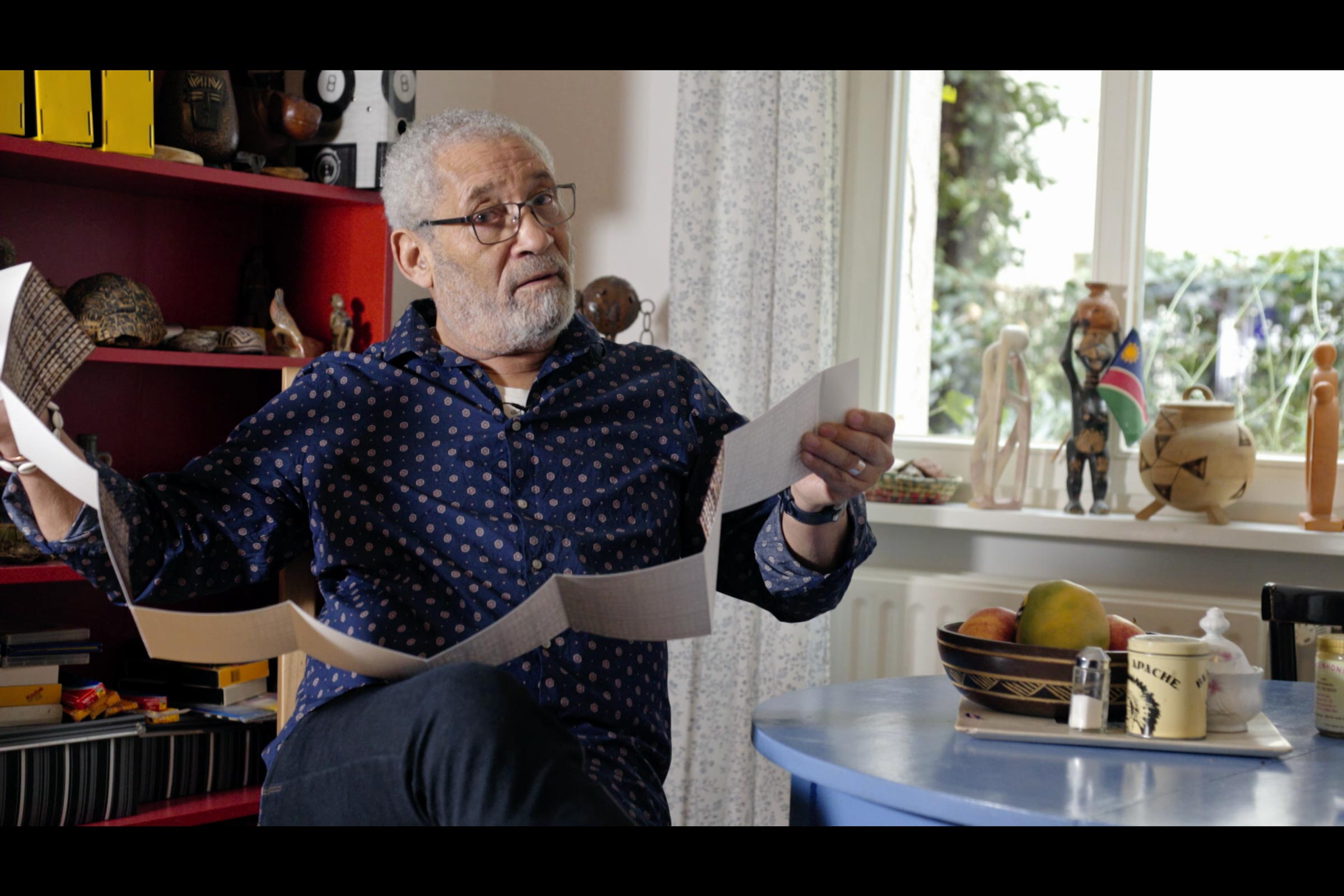
CULTURE considers how human remains are understood and treated across different scientific, cultural, and spiritual contexts. The film examines the processes through which a deceased person can become a scientific specimen – removed from social relations, classified, labelled, stored, and made comparable – alongside perspectives in which the dead remain persons, relatives, or ancestors.
RETURN
29 min
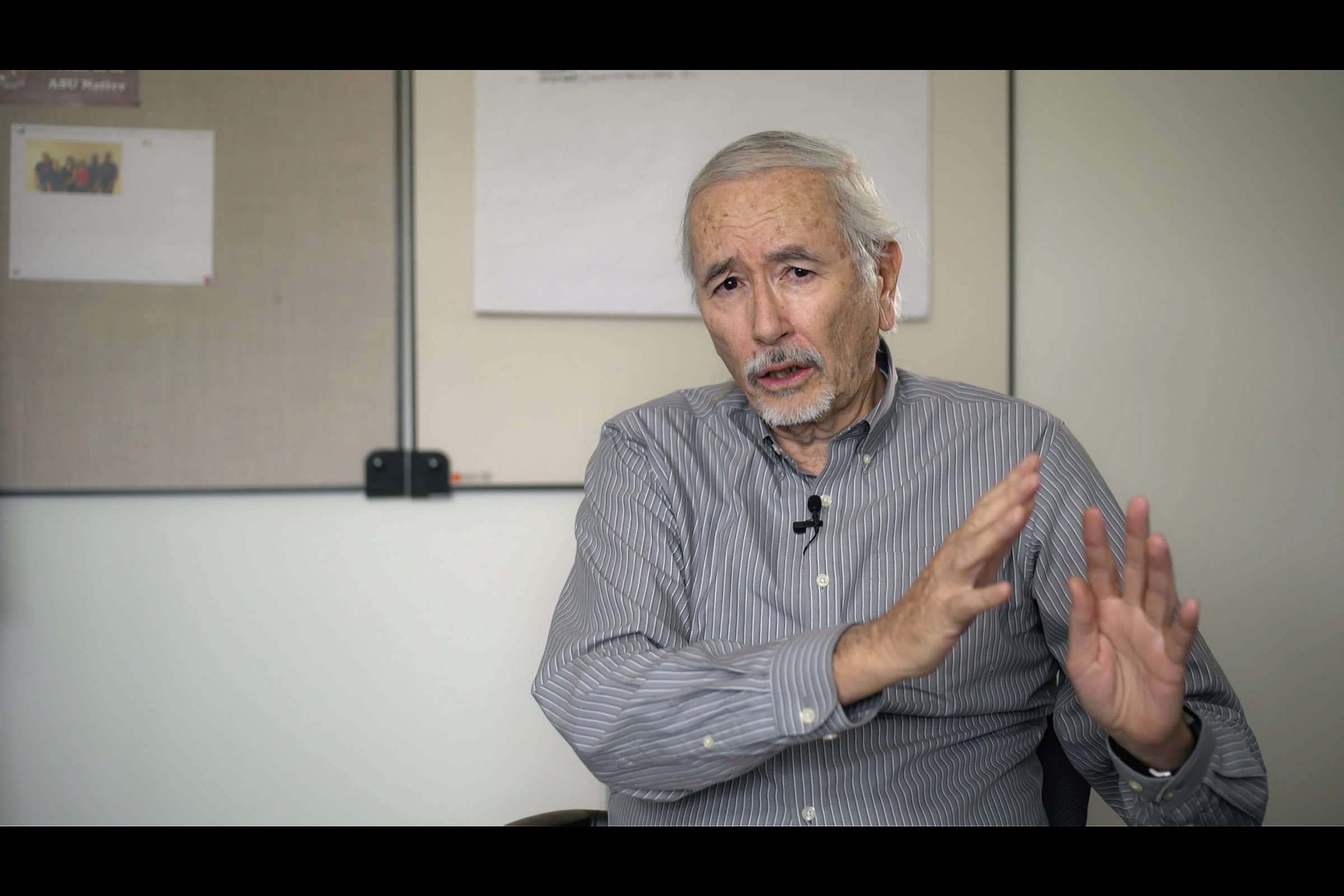
RETURN brings together different positions on the ownership, custody, and repatriation of human and ancestral remains. The film juxtaposes arguments for the return of ancestors to their communities with perspectives from those responsible for scientific collections, exposing fundamental differences in how responsibility, ownership, research, and the purpose of museums are understood.
PHOTOGRAPH
15 min
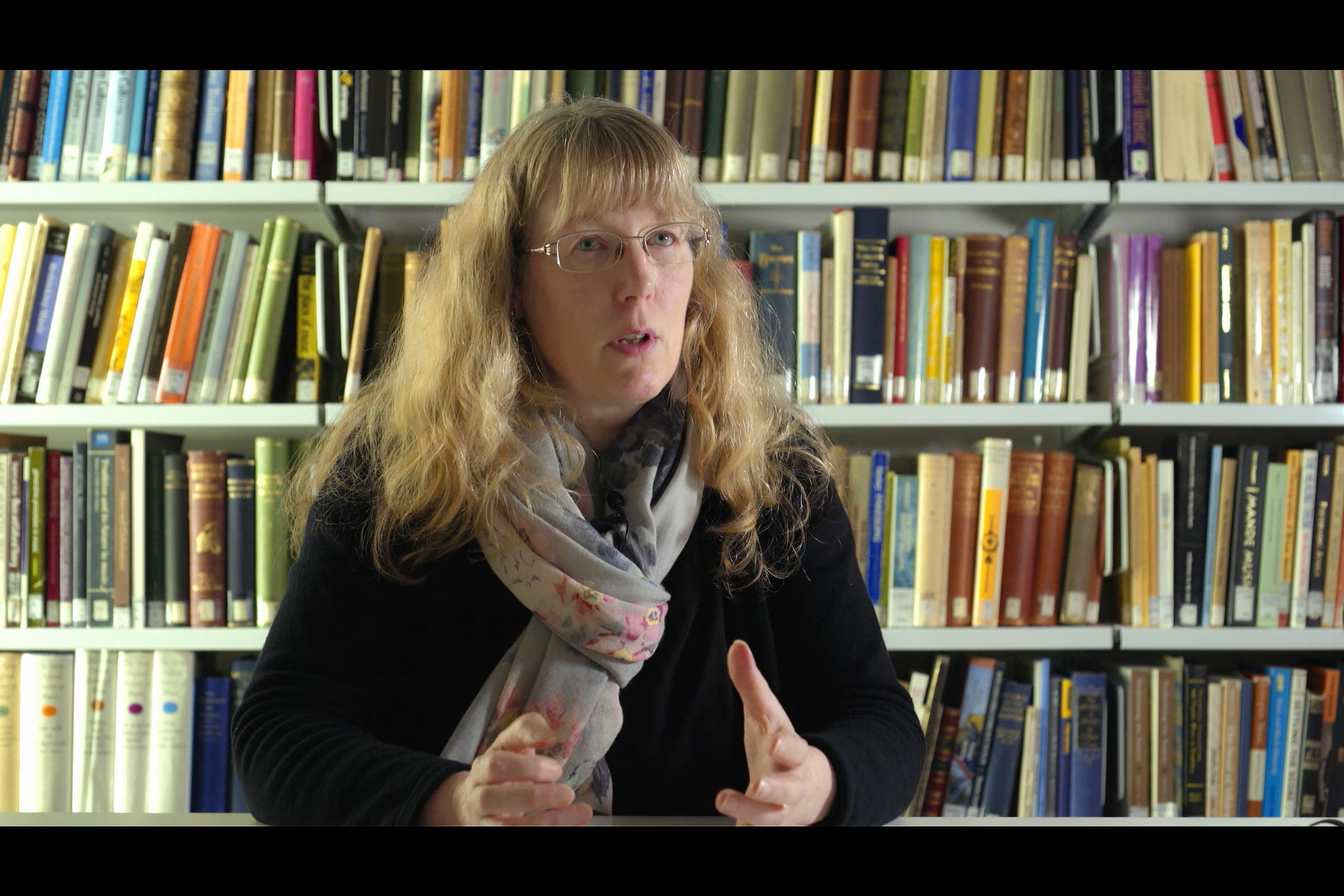
PHOTOGRAPH turns the questions raised by the project onto its own central image. Interviewees were shown a small accordion-folded print of the skull cabinet panorama, often for the first time, and asked whether the photograph should have been taken and whether it should be shown. Their different responses place the ethics of the artwork itself under scrutiny and prepare visitors for their own decision whether or not to see the panorama.
DARKROOM
21 min
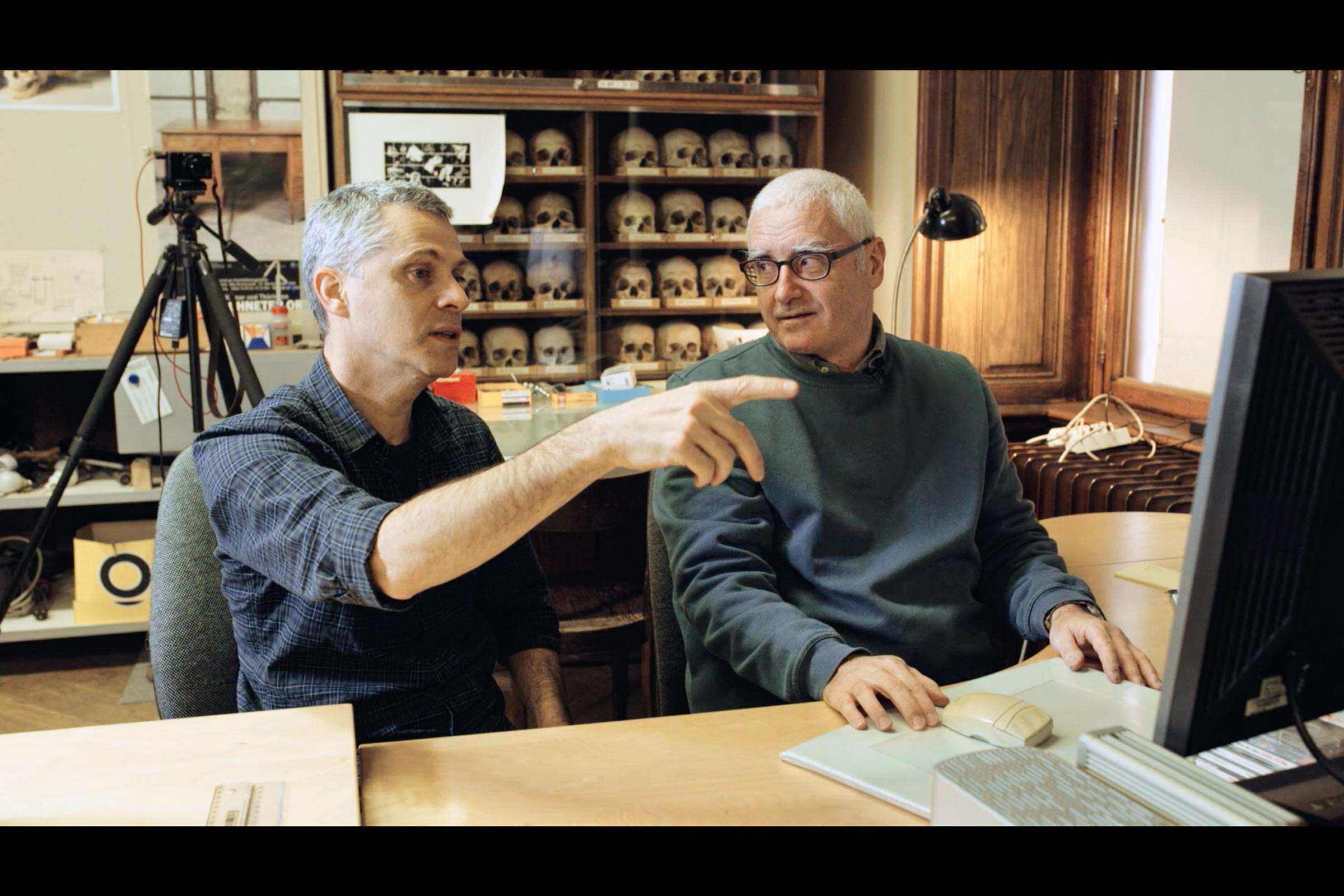
DARKROOM developed from a conversation between Adler and Wolfgang Reichmann, photographer at the Department of Anthropology of the Natural History Museum Vienna. Filmed in front of a monitor displaying images from the department’s historical photographic collection, Adler and Reichmann look at and discuss parts of this collection, including images made under racist, coercive, and abusive conditions. Their conversation moves between the histories contained in the archive and their own positions as photographers working with difficult images, turning questions of looking, photographing, and responsibility back onto the making of Dead Images itself.
Scripts, interviews, camera, lighting, and sound: Tal Adler
Editing: Tal Adler, Christiane Schniebel, Callum Fisher
Sound editing: Sebastian Meissner
Colour grading: Roman Keller / Malkasten Wien
Translations and subtitles: Harriet Merrow, Callum Fisher, Anna Szöke, Tal Adler
Interviewees:
Phramaha Anusak (Wat Buddhavihara Monastery / ai Buddhist Temple Berlin); Margit Berner (Natural History Museum Vienna); Sabine Eggers (Natural History Museum Vienna); Linda Fibiger (University of Edinburgh); Mike Fletcher (Honouring the Ancient Dead); Rabbi Karen Fox (Hebrew Union College); Te Herekiekie Haerehuka Herewini (Museum of New Zealand / Te Papa Tongarewa); June Jones (University of Birmingham); Natasha Kanapé Fontaine (poet and actress, Montréal); Israel Kaunatjike (Völkermord verjährt nicht!, Berlin); Christian Koeberl (director general & CEO, Natural History Museum Vienna), Jani Kuhnt Saptodewo (Weltmuseum Vienna); Sarah Levitt (Honouring the Ancient Dead); Stephanie Mach (University of Pennsylvania); Laura Peers (University of Oxford); Wolfgang Reichmann (Natural History Museum Vienna); James Riding In (Arizona State University); France Rivet (author, Gatineau, Quebec); Maria Teschler-Nicola (Natural History Museum Vienna); Wichian ong aimany (Wat Buddhavihara Monastery / ai Buddhist Temple Berlin); Alexander Urosevic (author, Vienna); Karin Wiltschke-Schrotta (Natural History Museum Vienna).