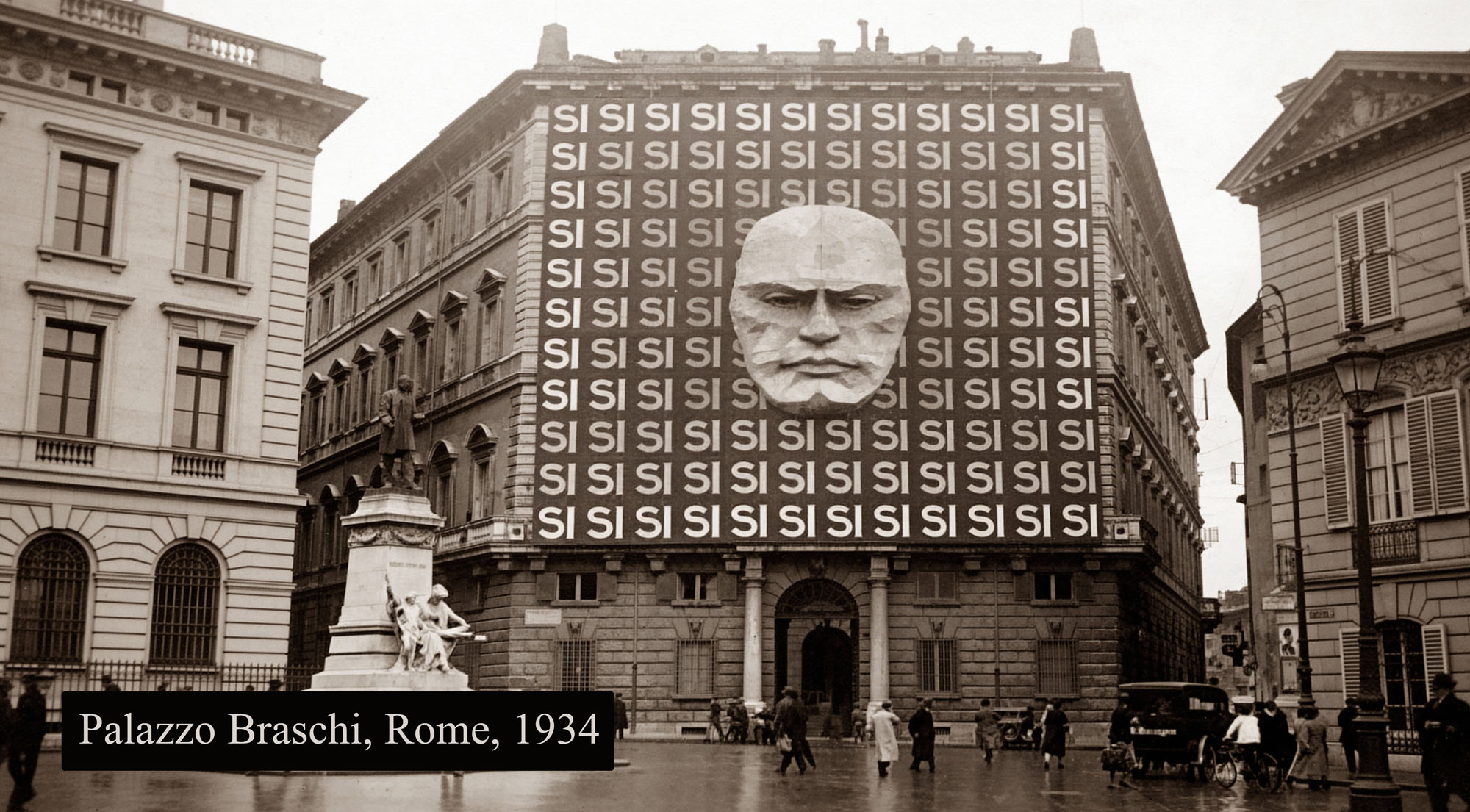
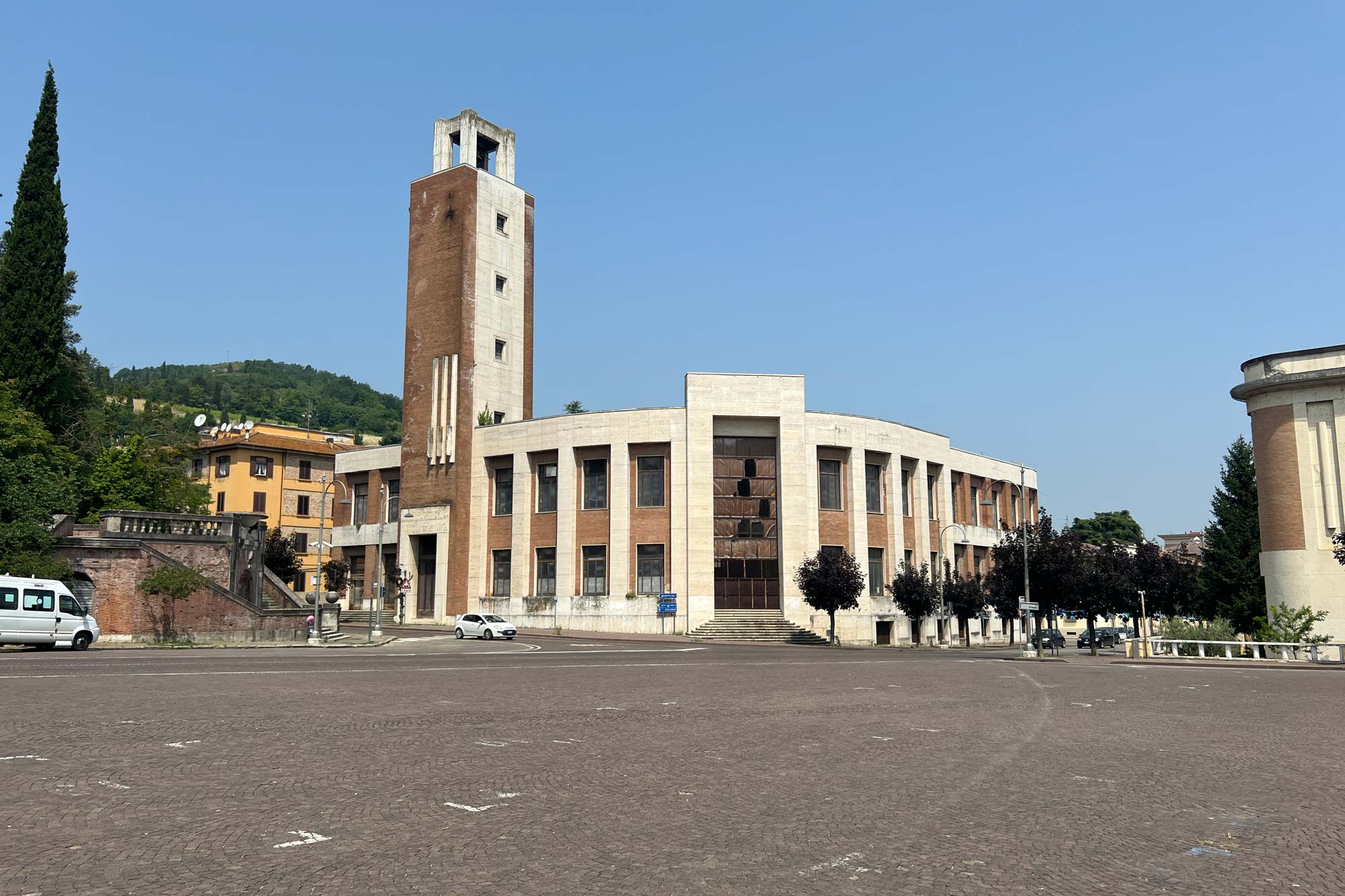
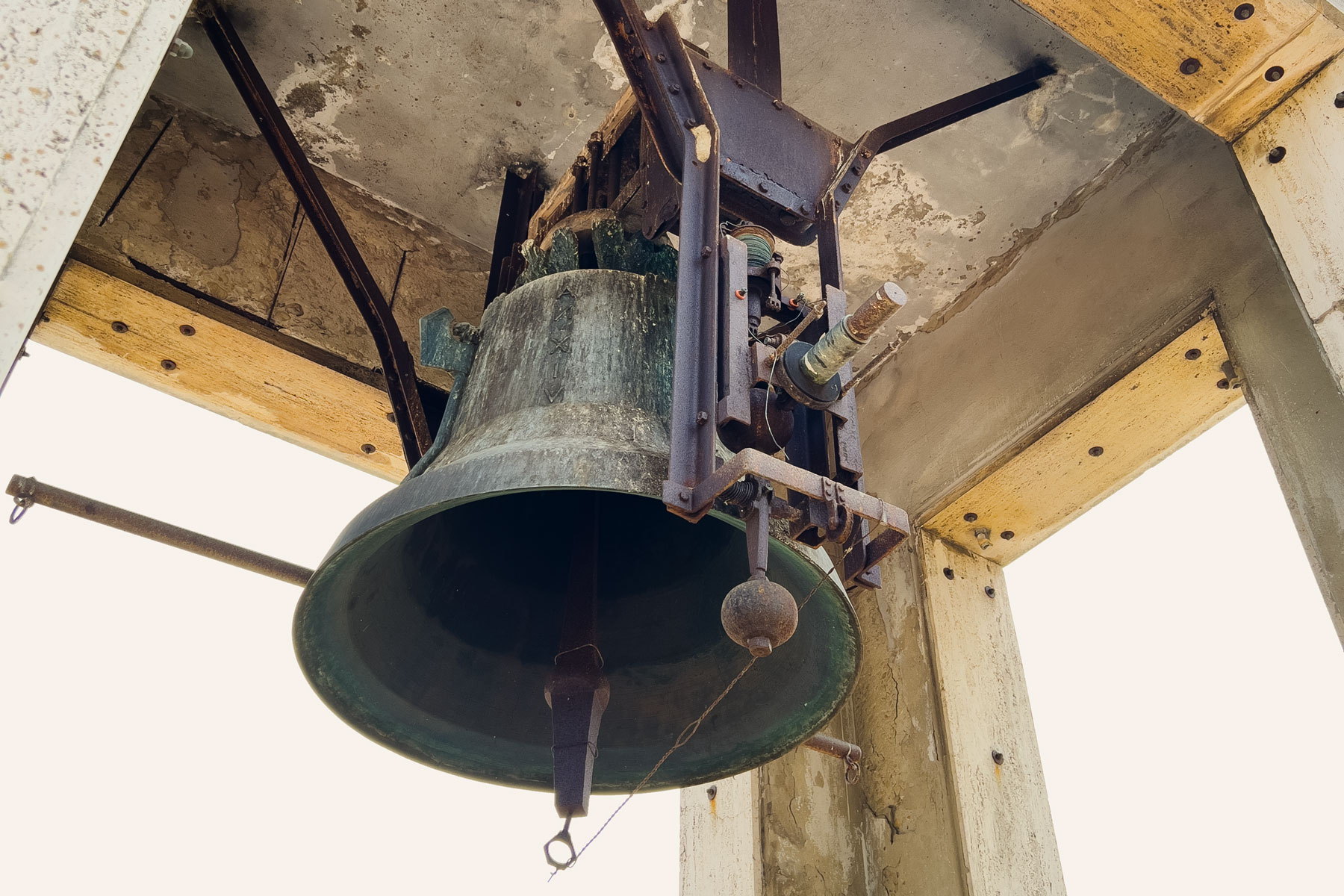
The former House of the Fascist Party in Predappio, Benito Mussolini’s birthplace, was inaugurated in 1937. Its tower still contains the large bronze bell once used in Fascist political and civic ceremonies, together with its then state-of-the-art electromagnetic striker. Several times a year, hundreds of neo-fascists march through the streets of Predappio, passing through the abandoned building, which has been slated for conservation since the early 2000s.
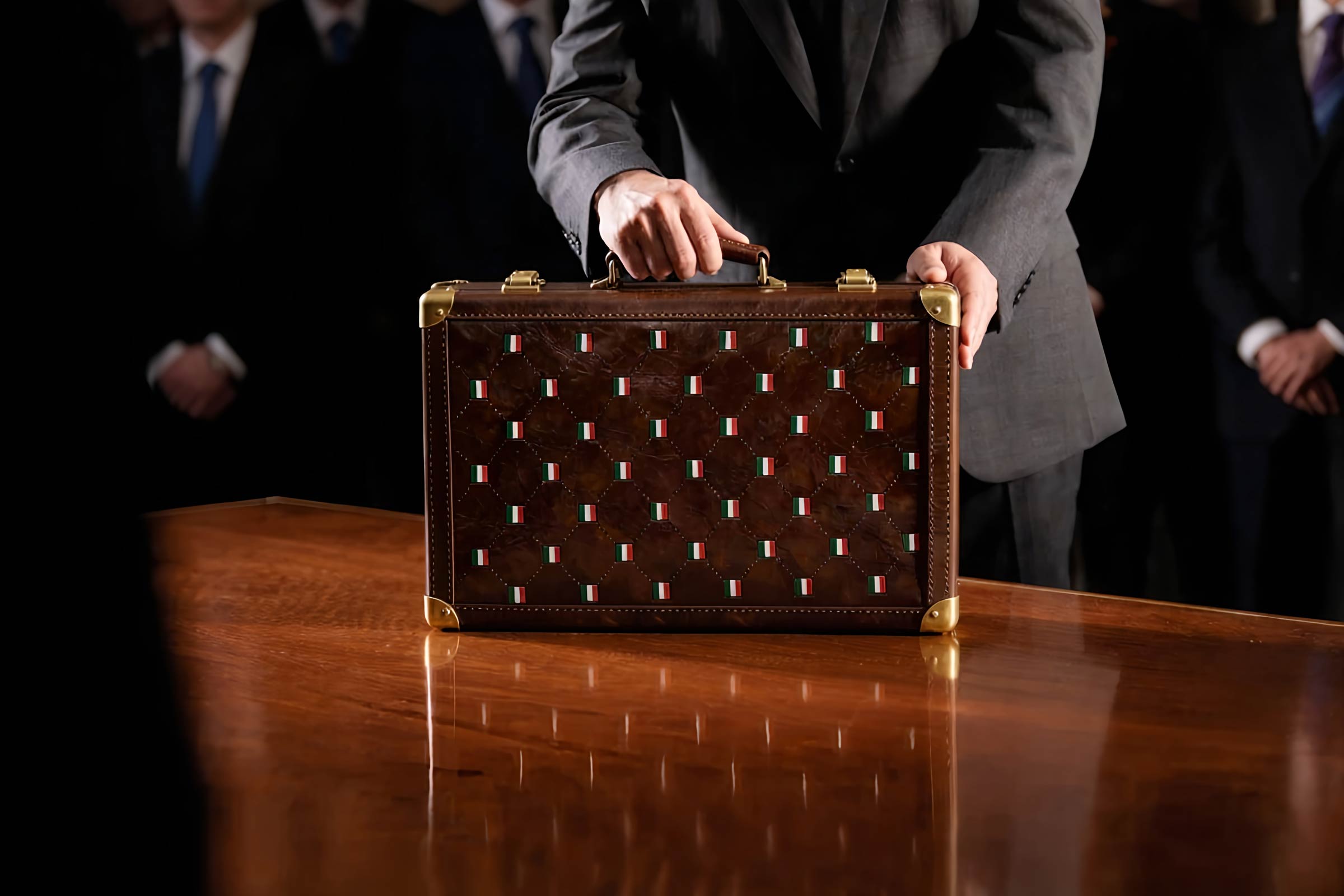
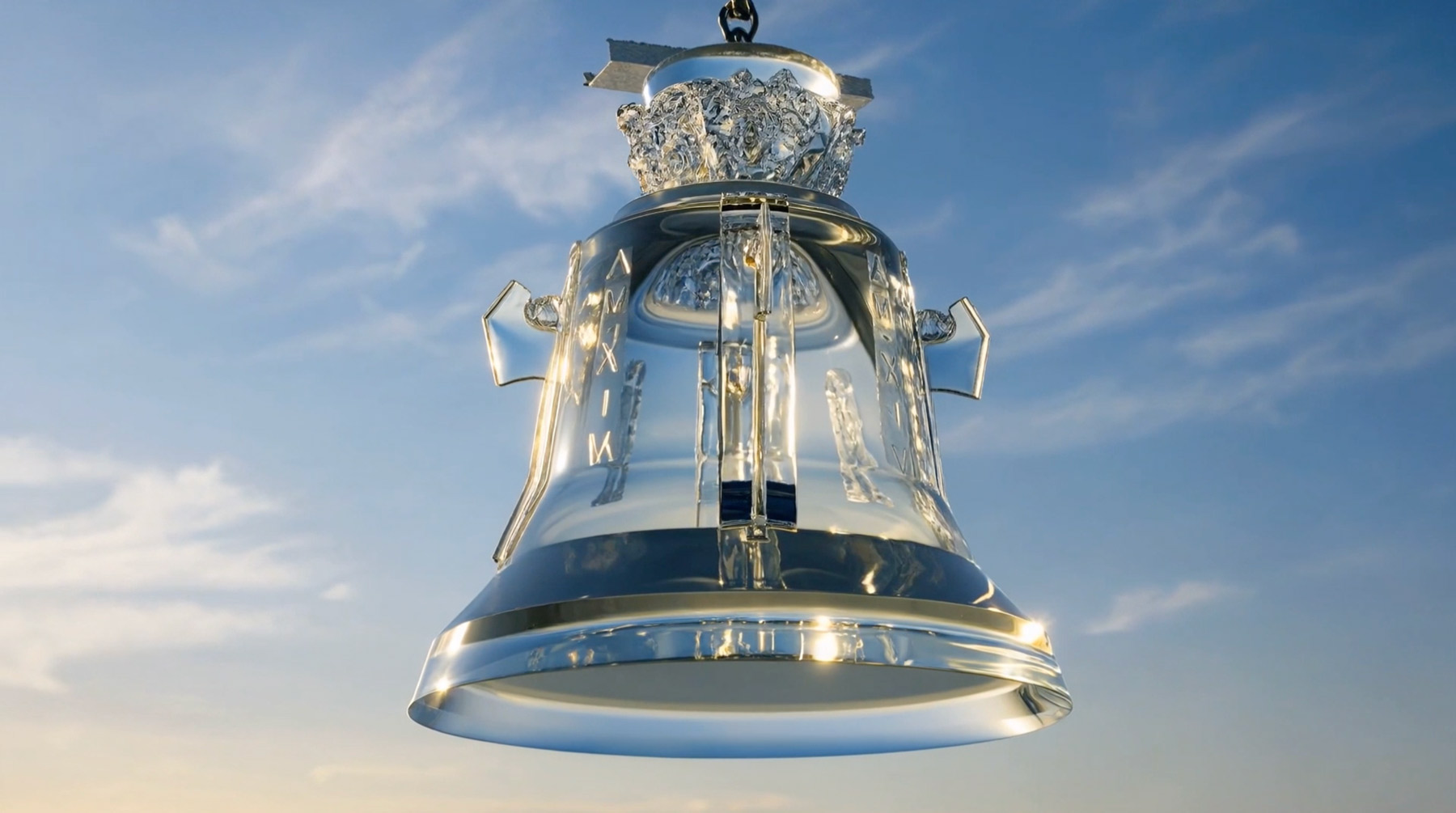
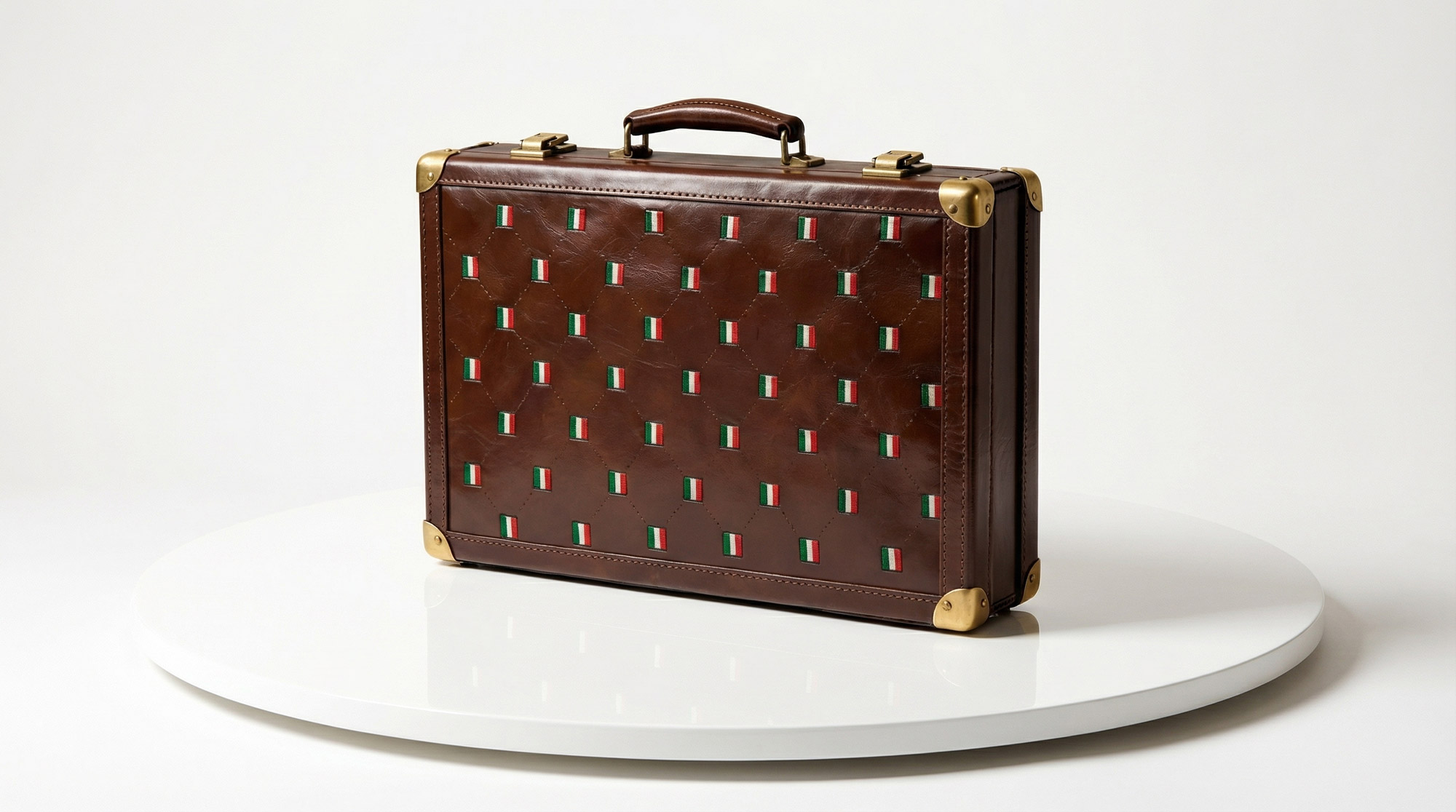
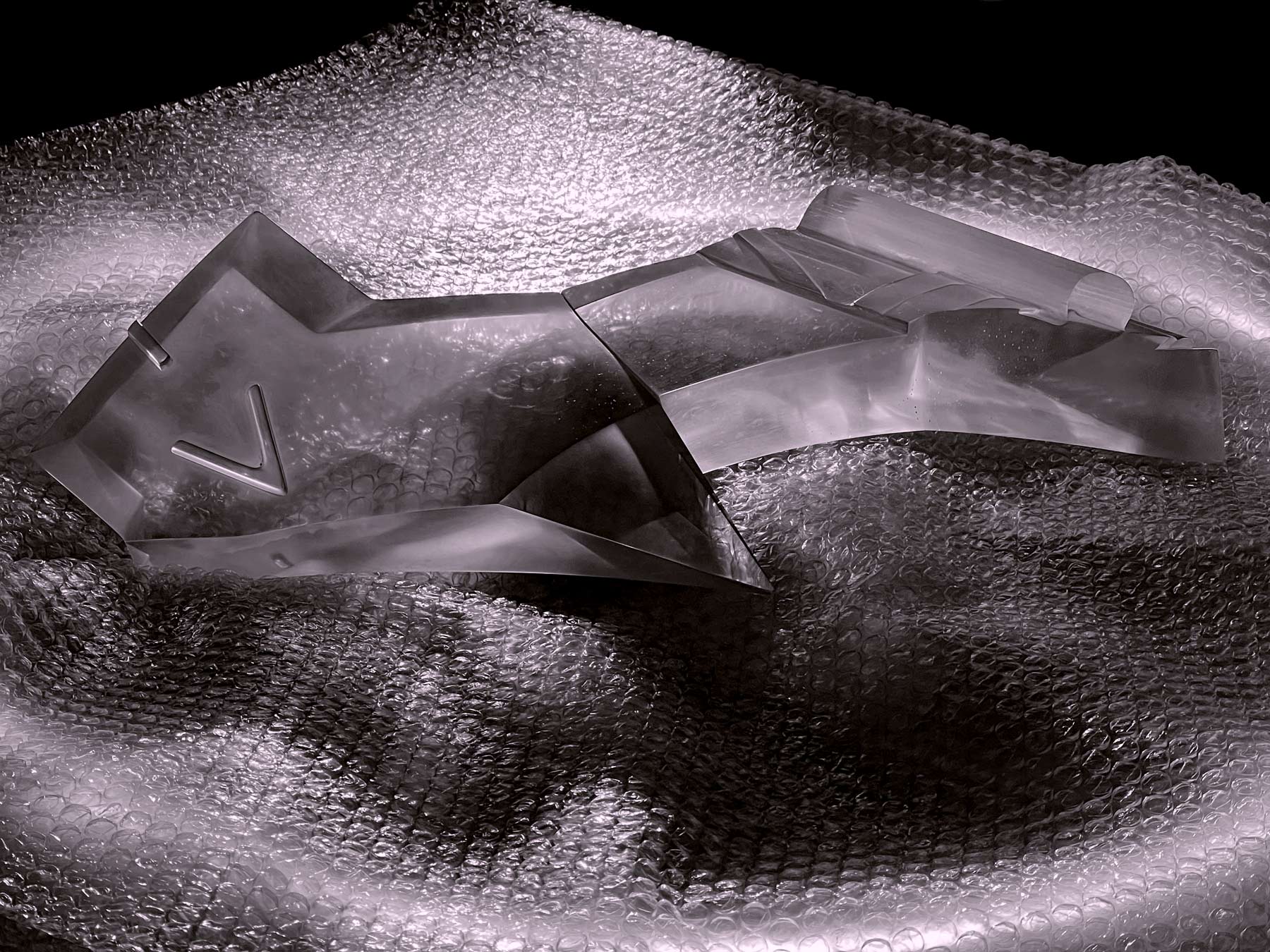
Fragile Power begins with this resonant building and imagines the completion of its restoration. The original bell is removed and replaced by an exact replica made entirely of crystal glass. Its powerful 1930s striking mechanism is restored to full working condition and carefully attached to the new bell. A wireless activation system is housed in a custom-made briefcase, which, at the ceremonial reopening of the building, is handed over to political leadership.
This restoration narrative is presented as a promotional film whose affirmative language is complicated by references to the entanglements of glamour and power, Fascism and fashion. The work exposes a fundamental tension in the conservation of contested heritage: while material intervention can stabilize foundations and polish facades, their uses and meanings become increasingly contingent on the interplay between their inherent legacies and the sociopolitical contexts enveloping them. Fragile Power turns this tension into an open-ended game of possible futures, leaving the viewer to consider who might ring the bell, under what circumstances, and with what consequences.


Fragile Power was commissioned by the Co.Co.War. Dissonant Heritage and War. Conservation and Communication of a Difficult Legacy – a research project funded by the Italian Ministry of University and Research. The work was presented at the Co.Co.War Final Conference and Exhibition, Castello del Valentino, Turin, February 2026.
Research concerning Swarovski and National Socialism draws on the work of historian Horst Schreiber, including Das Unternehmen Swarovski im Nationalsozialismus (StudienVerlag, 2025).